
Algae Resistant Roof Shingles
RRoofpedia guideCredits: Roofer Mike, Inc., Roof-A-Cide2,005 words · 9 min read
Free tool
Try a new roof on your housePick shingle colors on a house in the house designer, with siding, trim and gutters to match.Algae resistant shingles are asphalt shingles made with copper-bearing granules mixed in among the regular ones, so rain carries a little copper across the surface and slows the algae that causes black streaks. They resist algae rather than stop it for good, and they only come with a new roof, so ask for them when the roof is replaced.
Learn About Shingles That Resist Moss and Algae
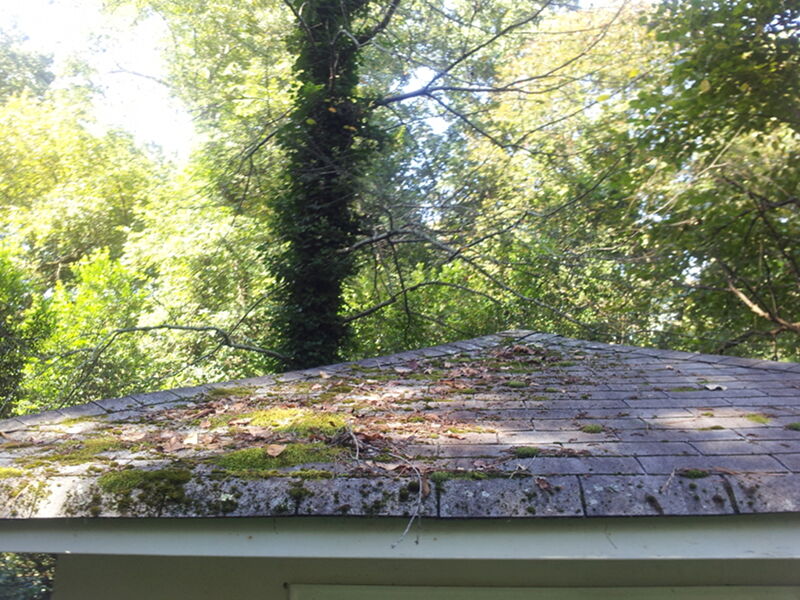
For roofs that either get a lot of shade or are constantly battling humid and hot conditions moss and algae can be a problem. Algae and or moss often show up on the east facing side of the roof but can also show up on other faces as well based on the amount of shade, heat, and humidity.
There are a few options to preventing the algae or black streaks from appearing on roofs. The most efficient options involve algae resistant roof shingles. This article is going to talk about the details regarding these types of shingles.
*If you also need help with cleaning your vinyl siding click the link to the left, to read our entire how to guide.
What Are Algae Resistant Shingles?
Algae resistant shingles are specially made shingles that prevent algae growth. They look like normal shingles and to the naked eye seem to be the same but they are manufactured a little differently. The most effective AM shingles now have copper granules embeded in the asphalt shingle along with the normal granules. These copper granules are strategically embeded within each shingle itself to ensure that the entire shingle roof is protected and so that the roof keeps its uniform color and look.
“An active ingredient in many AR shingles is titanium dioxide.” (Michael Slatter of Roofer Mike Inc)
Pictures of Roofs with Algae
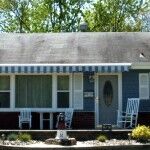
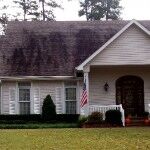
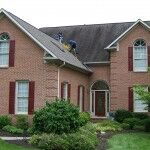
- Pictures provided courtesy of Roof-A-Cide.
When Did Algae Resistant Shingles First Get Introduced?
The idea to create asphalt shingles so that they could resist algae growth first began in the 1960s. In fact, the primary patent holder for algae resisting shingles is 3M and their patents go back to the 60s.
From the 60s till now the way AM shingles have been manufactured has varied. At first manufacturers tried to apply an algaecide coating to keep the algae from growing on the shingle. Later zinc was used to help prevent algae and moss growth. Zinc, like copper or aluminum, works but it was discontinued and is looked down upon a little bit because it can harm the environment.
Now the most common method of preventing algae growth on shingle roofs is by manufacturing the shingles with a percentage of copper granules in them. A common percentage of copper granules is roughly 10%.
Since their inception algae resistant shingles have continued to grow in use and popularity. In some states and counties, such as Miami Dade County algae resistant shingles have been code since 1992 after Hurricane Andrew. (Michael Slatter of Roofer Mike Inc)
Do The Black Streaks Harm The Roof?
When home owners first start seeing black streaks on their roofs many wonder if there roof is being damaged. To all those who wonder if algae or black streaks shorten the life span of your home the answer is no. Algae growth is purely a cosmetic problem. However, moss and algae sometimes get mixed up and confused. Moss can cause damage which could harm your home and roof. Read this article on removing moss on roofs to learn more about moss, removing it, and how it affects your roof.
Although “algae discoloration is primarily an aesthetic issue, it does have a negative impact on overall property values. This also makes it a monetary issue if you’re trying to sell a property or simply trying to maintain the existing value of the property. The actual algae growth or staining probably does not have a measurable impact on the life of the shingles, but when a light grey roof turns black, it’s going to draw more heat and increase cooling costs – or the overall ownership cost of the roof.” (John Browne of Roof-A-Cide)
Manufacturers of Algae Resistant Roof Shingles
As far as we are aware every major manufacturer of asphalt roofing shingles offers an AR shingle. The best thing in order to know about which algae resistant shingles are offered in your area is to contact a trusted roofing company.
Here is our list of shingle manufacturers.
GAF Algae Resistant Shingles
GAF employs Stain Guard technology with limited warranty for algae protection. [2]
Atlas Algae Resistant Shingles
Atlas is known for their new Lifetime Warranty “Algae Resistant” shingle technology incorporating Scotchguard 3M, but other manufacturers have claims, as well. Copper laden granules is the main key to the resistance factor of shingles, zinc and magnesium are also algae resistant.
The resistance on these shingles will outlast storm damage to shingles, so to say they have lifetime protection… I would strongly agree.[3]
Warranties
“The AR shingles have been around for a while, especially in the South, but they have different expected performance periods with respect to how long they will keep algae from growing. Even though the manufacturers may give a 10 year or even lifetime warranty against algae discoloration, very few of them actually hold up for longer than five years in Florida and seven to eight as you move north. (When you read the fine print on the warranties, you’ll see that most offer a small rebate on cleaning when the algae starts to grow within the warranty period).” (John Browne of Roof-A-Cide)
Will algae resistant shingles actually stay true to their warranty? Each algae resistant shingle warranty will vary. It is important to read the fine print to fully understand each warranty. Another aspect to remember is they are called algae resistant shingles not algae proof. In fact, if AR shingles don’t see much sunlight they will not be able to resist algae for long. We have actually received confirmation from a certified professional roofer that if the humidity percentages stay at over 70% during the summer with very little to no sunlight hitting the shingles then the AR shingles will hold up just as good or “bad” in this case as shingles that are not AR resistant.
Resources
Inspectapedia.com's article on Shingle Algae
Technical Advisory Buletin on Algae on Shingles by GAF
David Dodson from Rampart Roofing in Frisco, TX
Pictures of black streaked roofs provided courtesy of Roof-A-Cide and other information within the article is credited to John Browne of Roof-A-Cide.
Michael Slattery shared his knowledge on AR shingles based on his experience with them in Miami, Dade County as the owner of Roofer Mike, Inc
We would like to thank Mark Rothbauer, who is the CEO of Elite Claims Management in Colorado Springs, for the information shared with us during our phone interview. Mark is a professional roof adjuster who understands the ins and outs of roofs.
Gloeocapsa magma: the roof algae behind black streaks
The black streaks on most asphalt roofs are caused by Gloeocapsa magma, a cyanobacterium usually called blue-green algae. It travels as spores on the wind and on birds and animals, settles on the shingles, and feeds on the limestone filler that many asphalt shingles contain. As a colony grows it forms a dark, pigmented outer coating, which is why the stain keeps darkening instead of staying green.
It thrives where roofs stay damp: humid regions, shaded slopes, and the parts of a roof that dry last after rain or morning dew. Light-colored shingles show it soonest. Darker shingles grow it just the same; the streaks are simply harder to see from the street.
Copper and zinc are toxic to it. That is the whole idea behind algae resistant shingles, and it is also why you often see a clean stripe below copper or galvanized flashing on an otherwise streaked roof. The special granules on an AR shingle carry copper that rain slowly releases, so the shingle surface stays a poor home for the algae for as long as that copper keeps coming off.
How to choose algae resistant shingles
If you live somewhere humid, have big trees close to the house, or can already see streaks on the roofs around you, ask for algae resistance on any new roof. In many humid regions the shingle lines that distributors stock already include it as standard. Elsewhere it may be a separate product line or an option, so ask rather than assume.
Look for algae resistance in writing. The bundle wrapper, the product's spec sheet and the manufacturer's warranty will name it, and the warranty usually gives algae coverage its own term, separate from the main shingle warranty. Read what that algae coverage actually pays for. Ask the roofer to write the exact product line and color on the contract so there is no question later about what went on the house.
Ask about the hip and ridge caps too. They are often sold as a separate product, and you want them to carry the same protection as the rest of the roof. Finally, conditions still matter. A roof sitting under a heavy canopy of trees will push any algae resistant shingle hard, so cutting back overhanging limbs while the roof is being replaced helps the new shingles keep their color.
Roof algae on a roof that is not algae resistant
Algae resistance cannot be added to shingles that are already on the roof. The copper is part of the granules made at the factory, and no spray or coating turns a standard shingle into an AR shingle. If your current roof is streaking, your choices are to clean it, to slow the regrowth, or to live with the look until the roof is due.
A gentle low-pressure algae wash removes the streaks. Copper or zinc strips installed near the ridge give a standard roof some of the same chemistry, though the effect weakens farther down the slope. Neither changes the shingle itself, so on a shaded, humid roof the streaks will eventually come back.
When the roof is near the end of its life anyway, it often makes more sense to put the money toward the replacement and choose AR shingles than to keep cleaning an old roof. When the roof is fairly new, cleaning plus strips is the practical route. Either way, streaks are a looks problem, not a sign the roof is failing.
Questions people ask
What is Gloeocapsa magma?
It is the blue-green algae, technically a cyanobacterium, behind most black streaks on asphalt roofs. Its spores drift on the wind, it feeds on limestone filler in shingles, and it forms a dark coating as it spreads. It stains the roof rather than eating through it.
Do algae resistant shingles really work?
They slow algae growth, which is why most makers back them with a separate algae warranty. They do not make a roof algae-proof. Deep shade, constant humidity and debris left lying on the roof all shorten how long they stay clean.
How can I tell if my shingles are algae resistant?
Usually not by looking. Check the paperwork from the roof installation, a leftover bundle wrapper in the garage, or the warranty registration. The roofer who installed it can tell you the product line, and the shingle maker lists which of its lines carry algae resistance.
Do algae resistant shingles cost more?
Sometimes a little and sometimes nothing extra, because in many humid markets the standard shingle lines already include it. Where it is a separate option, ask the roofer to price the roof both ways so you can see the difference for your house.
Can you clean algae resistant shingles?
Yes, with the same gentle low-pressure wash used on other asphalt shingles. Skip pressure washing and scrubbing, which knock granules loose, including the copper-bearing ones that give the shingle its protection.
This guide was updated in October 2026 with new sections and the questions people ask most.
Roofers near you
Papalocal lists 57,668 roofers. Search them by town.
Related guides
 New: Asphalt Shingle Roof: What Every Homeowner Should Know
 Types of Roofing Shingles
 Architectural Shingles vs 3 tab Shingles
 When To Replace Roof Shingles?
Your business? Claim it free